
Dry Rot & Wet Rot Treatment Across Leinster
Eradicating Serpula lacrymans (dry rot) and Coniophora puteana (wet rot) at the source.
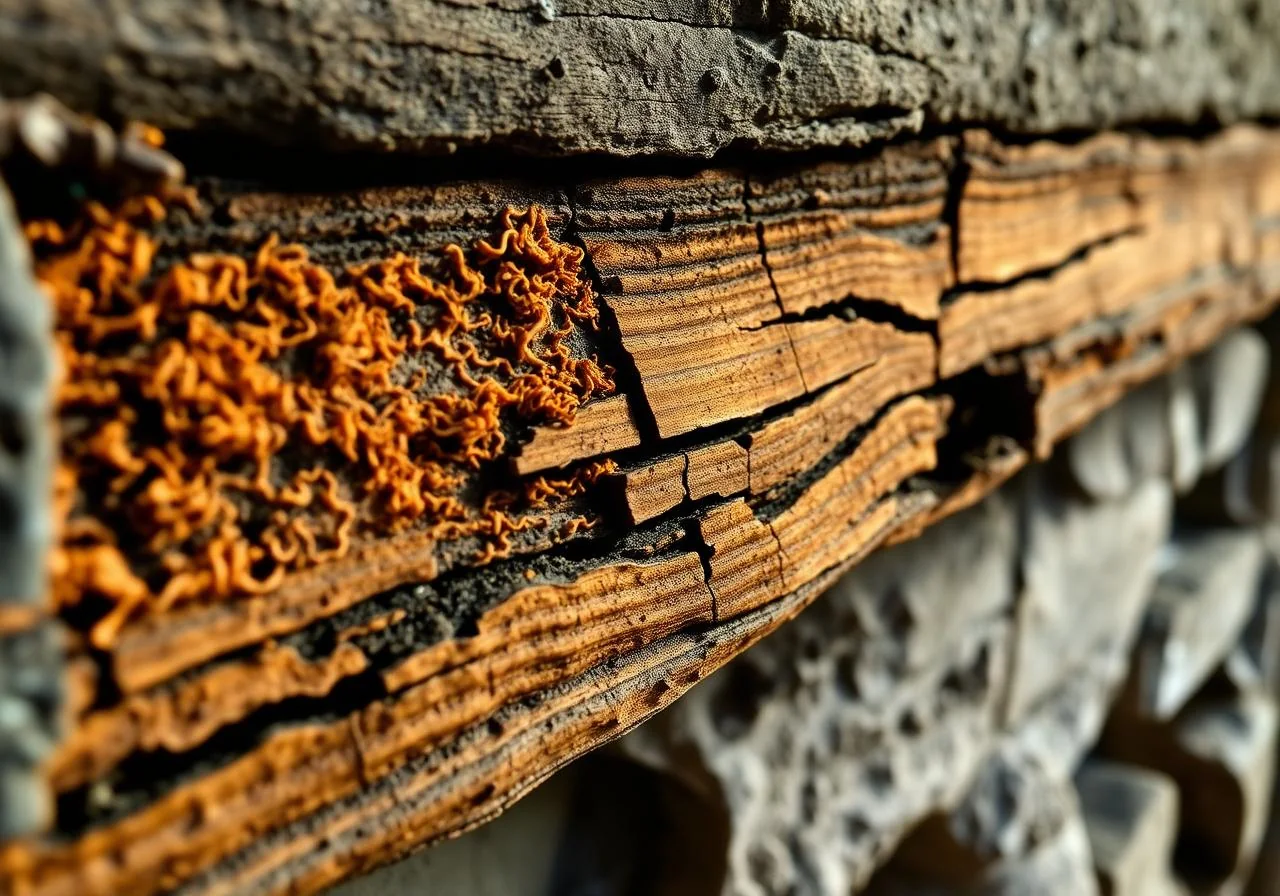
Dry rot vs. wet rot at a glance
Two different fungi, two different treatment programmes, two very different timelines. Getting the diagnosis right is half the work.
| Trait | Dry rot | Wet rot |
|---|---|---|
| Latin name | Serpula lacrymans | Coniophora puteana (most common) |
| Moisture needed | Decays timber from 20% MC | Needs 30%+ MC continuously |
| Smell | Strong musty mushroom odour | Damp earthy, less distinct |
| Cracking pattern | Cuboidal — breaks into cubes | Stringy, longitudinal |
| Spreads through masonry? | Yes — rhizomorphs to 3 m | No, confined to wet timber |
| Stops when timber dries? | No — carries its own moisture | Yes |
| Urgency | Quote within days | Quote within weeks |
The three-stage response
Dry rot (Serpula lacrymans) is the most destructive fungal decay affecting Irish buildings. Once established, it travels metres across masonry, behind plaster and into adjacent dry timber via rhizomorph strands — and it can decay sound timber that no other fungus can touch. Wet rot (Coniophora puteana and others) is more common, less aggressive, and confined to wet timber. Both demand a three-stage response: stop the moisture, eradicate the fungus, restore the timber.
We are PCA CSRT-certified surveyors based in Enniscorthy, Co Wexford with a 35+ year track record across Leinster and the South East — and a measured recurrence rate below 0.5 % over the last five years. The recurrence number is what matters. Most rot returns because the underlying moisture defect was never properly closed; we control the moisture investigation and the fungal eradication ourselves so the chain of responsibility never breaks.
Why dry rot is the more serious diagnosis
An untreated dry rot outbreak can write off a property. We have surveyed Georgian houses where a single un-investigated rust stain on a ceiling turned out to be a Serpula lacrymans colony that had already migrated across the joists, into the wall plate, behind the plaster of the room above, and into the timber wall panelling of an adjacent room — €40,000 of remediation that started as a €350 leak repair four years earlier.
Worse, dry rot is the only fungus that can keep decaying timber after the original moisture source has dried up. Once it's established, it carries its own moisture in rhizomorph strands and continues to spread. Time is not on your side; a confirmed outbreak deserves a quote within days, not months.
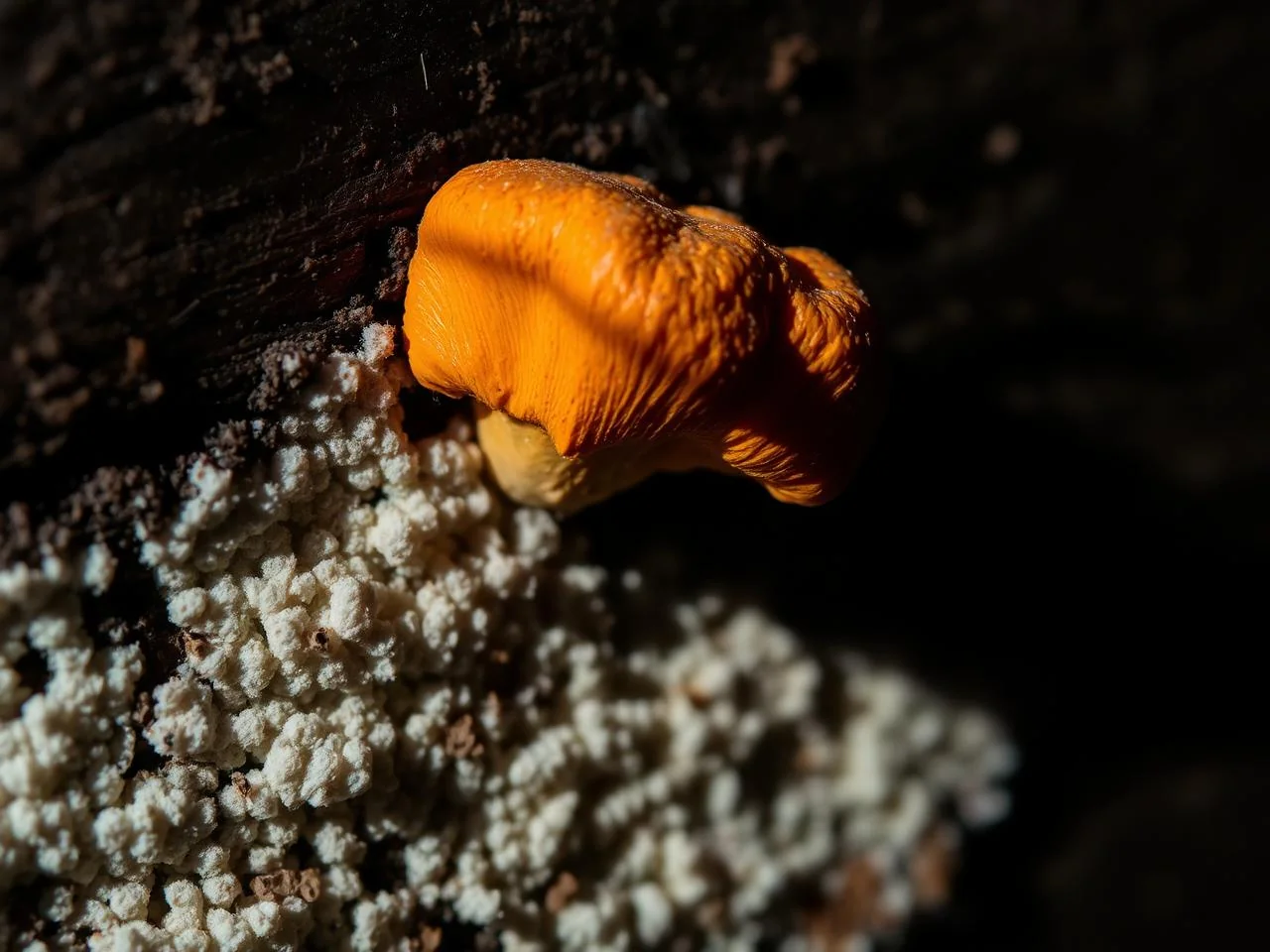
Six warning signs in an Irish property
Two or more of these and you should book a quote this week — not this season.
Strong musty mushroom smell
The most reliable early sign — a pungent damp-mushroom odour from a cellar, under-stairs cupboard or void.
Cuboidal cracking
Dry, brittle timber that breaks into 20–50 mm cubes — a Serpula signature; wet rot is stringy and darker.
White cotton-wool mycelium
Fluffy white growth on timber, masonry or plaster — the active mycelium phase of dry rot.
Orange-rust spore dust
Fine rust-coloured powder on surfaces below an infection — often noticed before any timber damage is visible.
Pancake-shaped fruiting bodies
Flat, orange-and-white fruiting bodies on walls or skirting — the late, reproductive stage of an established colony.
Bouncy or hollow-sounding floorboards
Floorboards or skirting that sound hollow when tapped, even where no surface staining is visible.
Our seven-stage eradication
- 1
Species identification
We confirm whether it's Serpula (dry rot), Coniophora (cellar fungus), Poria placenta or one of the secondary wet-rot species. The species determines the scope of strip-out and the moisture threshold needed for re-attack.
- 2
Moisture investigation
A calibrated Protimeter Surveymaster traces every metre of damp back to its source — leaking roof, blocked gutter, failed DPC, blown render, condensation, plumbing leak. The moisture defect is the root cause; we list it explicitly in the quote.
- 3
Strip-back & masonry sterilisation
Contaminated plaster is cut back 1.5 m beyond the last visible mycelium strand (PCA code). Exposed masonry is sterilised with a boron/glycol fungicidal biocide compliant with BS 5589.
- 4
Structural replacement of decayed timber
Decayed members are removed and replaced in pre-treated matched timber, with DPC isolation strips at every timber-to-masonry junction.
- 5
Reconstruction with ventilation upgrade
Wall plates, joist ends and floor voids are re-built with deliberately increased ventilation — air bricks opened, sub-floor vents un-blocked, vent paths checked against current building regs.
- 6
GPI-insured
Your guarantee is insurance-backed by Guarantee Protection Insurance — meaning the cover transfers to a future owner even if we ceased trading tomorrow.
- 7
Year-1 and year-5 re-survey
We return at 12 months and again at 60 months to verify the moisture defect has stayed closed and the timber has stayed dry.
Dry rot in a return-room floor, contained in two weeks
A new owner of a Phibsboro red-brick terrace pulled up a damp carpet and found cuboidal cracking in the original pine joists. Our CSRT surveyor traced the moisture to a failed cast-iron downpipe in the rear yard that had been leaking against the gable for years. We stripped plaster back the full PCA-mandated 1.5 m beyond the last mycelium strand (1.8 m vertically up the return-room wall), sterilised the masonry, replaced four joists in pre-treated Irish oak, and the owner's roofer fitted a new cast-iron downpipe. Sign-off in 11 working days. Three years later, no recurrence.
Localised wet rot in a single joist or window cill runs €750–€1,400. A confined dry rot outbreak (typical bay window or chimney breast) is €3,500–€8,000. A serious whole-room dry rot strip-out and reconstruction can reach €12,000–€25,000. We quote separately for moisture-source repair (roof, gutters, plumbing) so you can use your own trades if you prefer.
Why Enviroteck for rot remediation
Sub-0.5 % recurrence rate
Tracked over the last five years' jobs — published and verifiable.
GPI insurance-backed
The guarantee survives even if we ceased trading; it transfers to any future owner of the property.
CSRT + CSDB certified surveyors
Property Care Association Certificated Surveyors in Remedial Treatment and Dampness in Buildings — the highest UK/IE remedial qualifications.
Moisture-and-fungus contract together
We control both the moisture investigation and the fungal eradication, so accountability never gets lost between trades.
Most-requested counties for dry & wet rot
Also serving across Leinster
Pair rot treatment with
Boron Surface Treatment
The first-line treatment for live Common Furniture Beetle in accessible Irish timber.
Learn more StructuralStructural Timber Replacement
When treatment alone isn't enough — sensitive heritage joinery to restore structural integrity.
Learn more DampDamp & Rising Damp Quote
Diagnosing the real cause — because most 'rising damp' isn't rising damp at all.
Learn moreTwelve diagnostic questions
Speak to a dry & wet rot specialist
Free on-site quote · written quote within 48 hours · no obligation. Most enquiries are returned within one working hour.