
Controlled Heat Treatment for Whole-Roof Woodworm
Whole-void thermal eradication when the infestation is too widespread for surface treatment.
Physics, not chemistry
Controlled heat treatment uses physics, not chemistry. Calibrated propane or electric heaters raise the air temperature of a sealed void to 55–60 °C and hold it there until every life stage of every woodworm species — egg, larva, pupa and adult — has been thermally eliminated. The lethal threshold inside the timber core is 55 °C for 90 minutes; we typically run the cycle for 4–6 hours to be sure.
Heat is the modern alternative to traditional chemical fumigation (sulfuryl fluoride, phosphine) which required 24–72 hours of building evacuation, chemical residue management and notification of the HSA. A heat-treated void is reoccupiable within four hours of cool-down. Nothing remains in the timber that shouldn't be there.
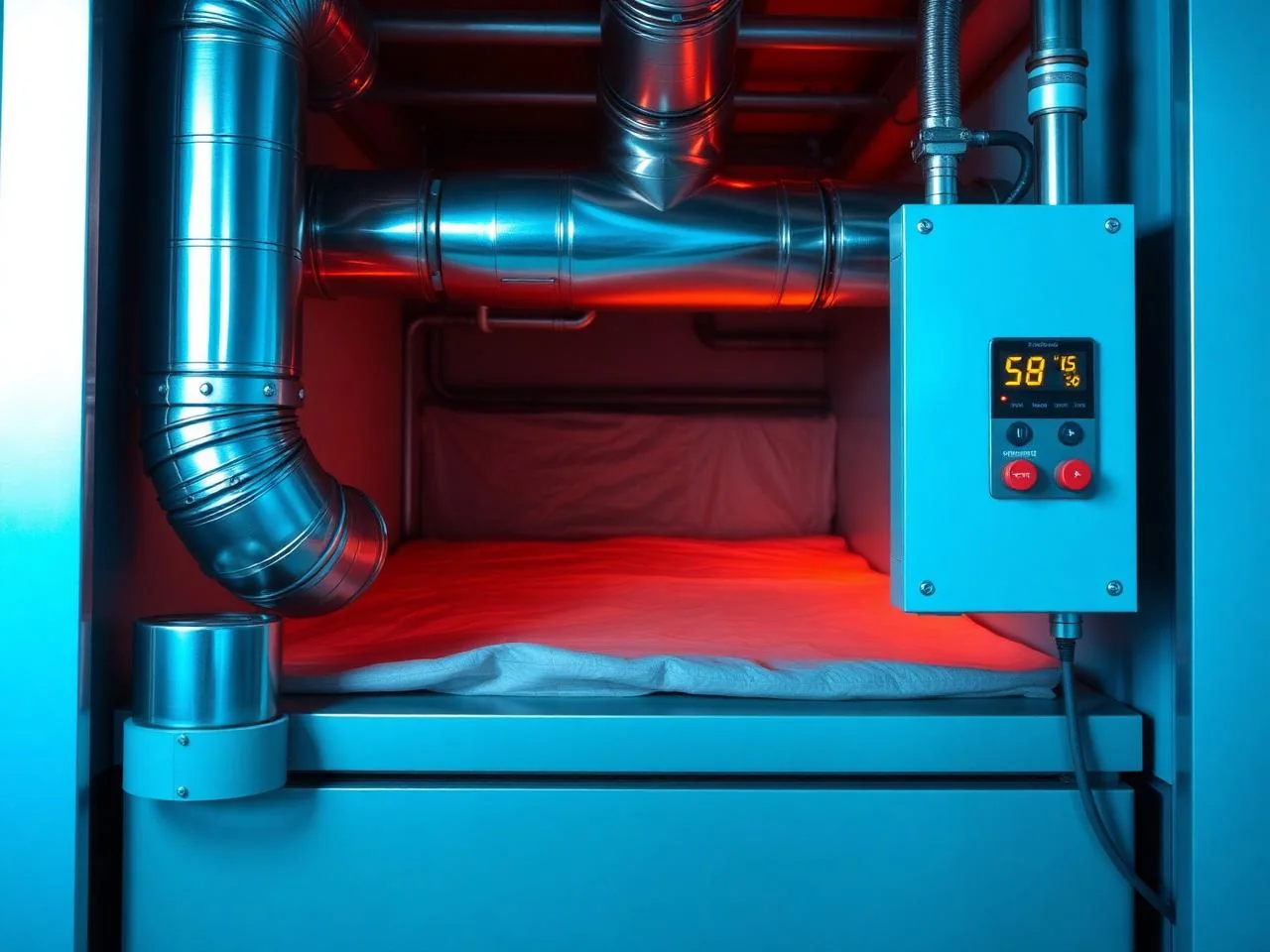
"The void is reoccupiable within four hours of cool-down. Nothing remains in the timber that shouldn't be there."
The case for whole-void thermal eradication
Severe whole-roof infestations are the wrong job for surface treatment alone. When every truss, purlin and rafter shows active flight holes you simply cannot brush-coat every face accurately, and the untreated patches become re-infestation reservoirs. Heat sterilises the whole void simultaneously and removes the human-error component entirely.
Heat is also the only treatment we offer for clients who genuinely cannot accept any chemical residue: organic farm certifications, museum back-of-house, religious-building conservation programmes, and a growing number of commercial conversions where post-treatment air-quality testing is contractually required.
When heat is the right call
Six specification triggers that move a project from surface treatment to a full thermal cycle.
Active flight holes across the whole void
If fresh emergence is visible in more than a third of the timbers, surface treatment alone will leave too many gaps.
House Longhorn evidence
Hylotrupes bajulus larvae spend 3–11 years deep in softwood; surface treatment cannot reach them — heat can.
Chemical-residue restrictions
Organic certification, museum or conservation specifications that prohibit any chemical residue in treated timber.
Severe infestation in commercial premises
Furniture stores, antique restoration, granaries — where the value of stored stock dwarfs the treatment cost.
Failed previous chemical treatments
When surface boron applied 2–5 years ago shows no improvement, the larvae are probably too deep — heat resets the clock.
Mixed-species infestations
Heat is species-agnostic; one cycle eradicates every beetle present without separate diagnosis.
The thermal cycle — seven calibrated stages
- 1
Thermal quote
We map every heat-sensitive item in the void — fire detectors, sprinkler heads, electrical cabling, soft furnishings, candles — and plan the seal and shield strategy.
- 2
Void seal & data-logger placement
Calibrated polyethylene sheeting seals the void. Data loggers go at the coldest predicted points (corner of external wall, centre of largest beam).
- 3
Heat ramp-up
Sealed propane or electric heaters raise air temperature progressively to 60 °C over 90–120 minutes. Continuous monitoring prevents hot-spotting.
- 4
Hold at lethal threshold
Once the coldest sensor confirms 55 °C, the temperature is held for a minimum of 90 minutes (typically 4–6 hours total cycle).
- 5
Controlled cool-down
Heaters off; void cools naturally over 2–3 hours. We re-enter once ambient drops below 35 °C.
- 6
Surface boron pairing
A single coat of surface boron applied immediately after cool-down gives 30+ years of residual protection against re-entry.
- 7
Documented audit trail
Your guarantee certificate includes the time-temperature curve from every logger, witnessed and dated.
Whole roof void heat-treated over a single weekend
A diocesan board contracted us to eradicate widespread Common Furniture Beetle across the entire roof void of a converted 1850s schoolhouse near Trim. Surface treatment had been attempted twice in the previous decade without success. We sealed the 380 sq m void with calibrated sheeting on the Friday evening, ran the heat cycle through Saturday (6.5 hours at 58–60 °C confirmed across nine loggers), cooled overnight, and applied surface boron on the Sunday. The building reopened to children on Monday morning. No new flight holes the following emergence season; none in the four years since.
Heat treatment is priced by void volume and access. A standard 80–120 m² domestic roof void runs €3,800–€6,500 including the follow-up boron coat. Commercial schemes — schools, churches, mill conversions — typically fall €8,000–€22,000 depending on the seal complexity and the number of zones. The price always includes the data-logged audit trail and the year-1 re-inspection.
Why Enviroteck for heat treatment
UKAS-traceable thermal plant
Our heat plant carries an annual UKAS-traceable calibration certificate; every job is therefore admissible as compliance evidence.
Data-logged audit trail
Time-temperature curve from every logger included in the guarantee — useful for insurance, organic certifications and protected-structure consent.
Chemical-free option
The only Leinster contractor offering a fully chemical-free woodworm eradication route with a written
Single-visit eradication
Every life stage gone in one heat cycle — no multi-visit re-treatment schedule, no extended chemical residue period.
Most-requested counties for heat treatment
Also serving across Leinster
Twelve questions on heat treatment
Pair heat treatment with
Boron Surface Treatment
The first-line treatment for live Common Furniture Beetle in accessible Irish timber.
Learn more WoodwormLow-Pressure Injection Treatment
For structural beams where surface treatment alone cannot reach the active larvae.
Learn more StructuralStructural Timber Replacement
When treatment alone isn't enough — sensitive heritage joinery to restore structural integrity.
Learn moreSpeak to a heat treatment specialist
Free on-site quote · written quote within 48 hours · no obligation. Most enquiries are returned within one working hour.